News & Insights
Inside Colors Art’s Printable Canvas Coating Production: From Base Fabric to Finished Rolls
Professional printable canvas is not created by base fabric alone. The final printing performance depends on the relationship between the fabric construction, coating formulation, surface uniformity, converting process and production consistency.
At Colors Art, printable canvas production involves several controlled stages, from coating and surface evaluation to slitting, rewinding and finished roll preparation. Each stage contributes to the stability and usability of the final media for professional printing applications.
Printable Canvas Production Starts with Controlled Coating
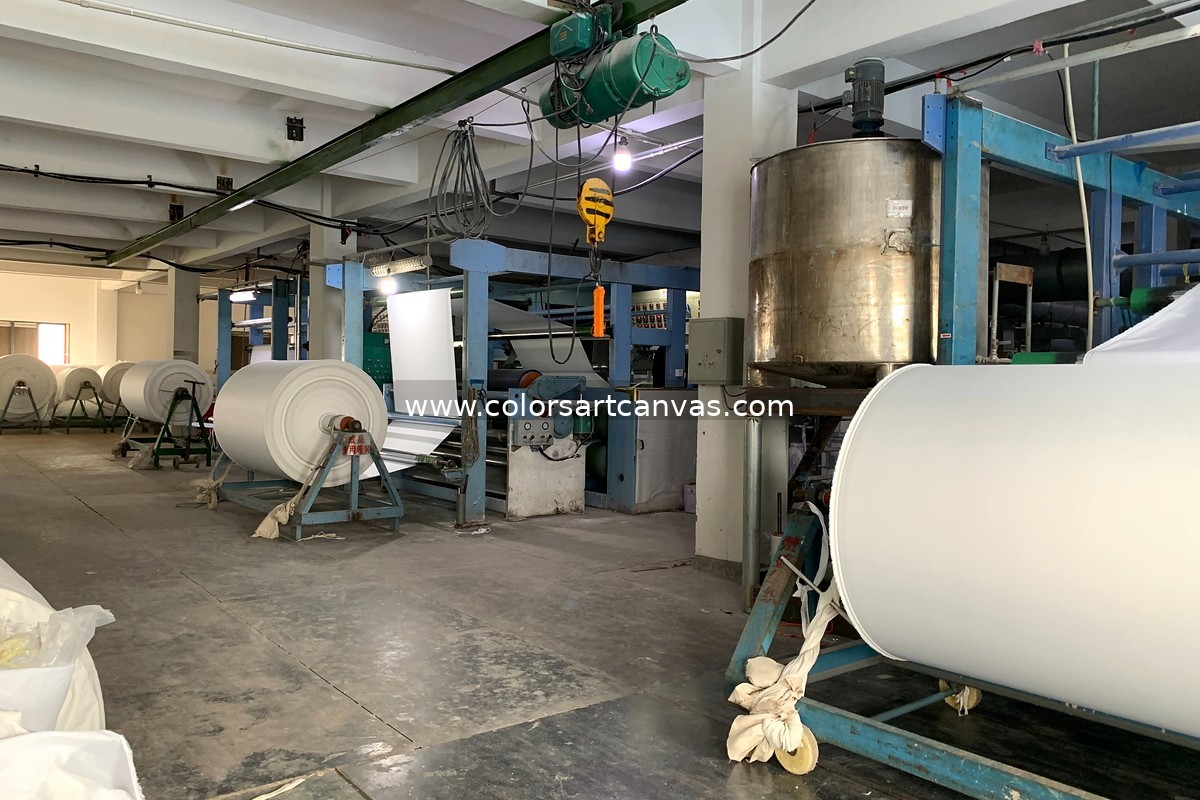
The coating layer is one of the most important parts of inkjet printable canvas. It influences how ink is received by the surface and affects color density, image detail, drying behavior and the overall printed appearance.
During production, coating application needs to remain stable across the width of the canvas so that the finished roll provides a consistent printable surface. The coating system is selected according to the intended canvas construction, surface finish and printing technology.
Coating Surface and Canvas Texture Need to Remain Uniform
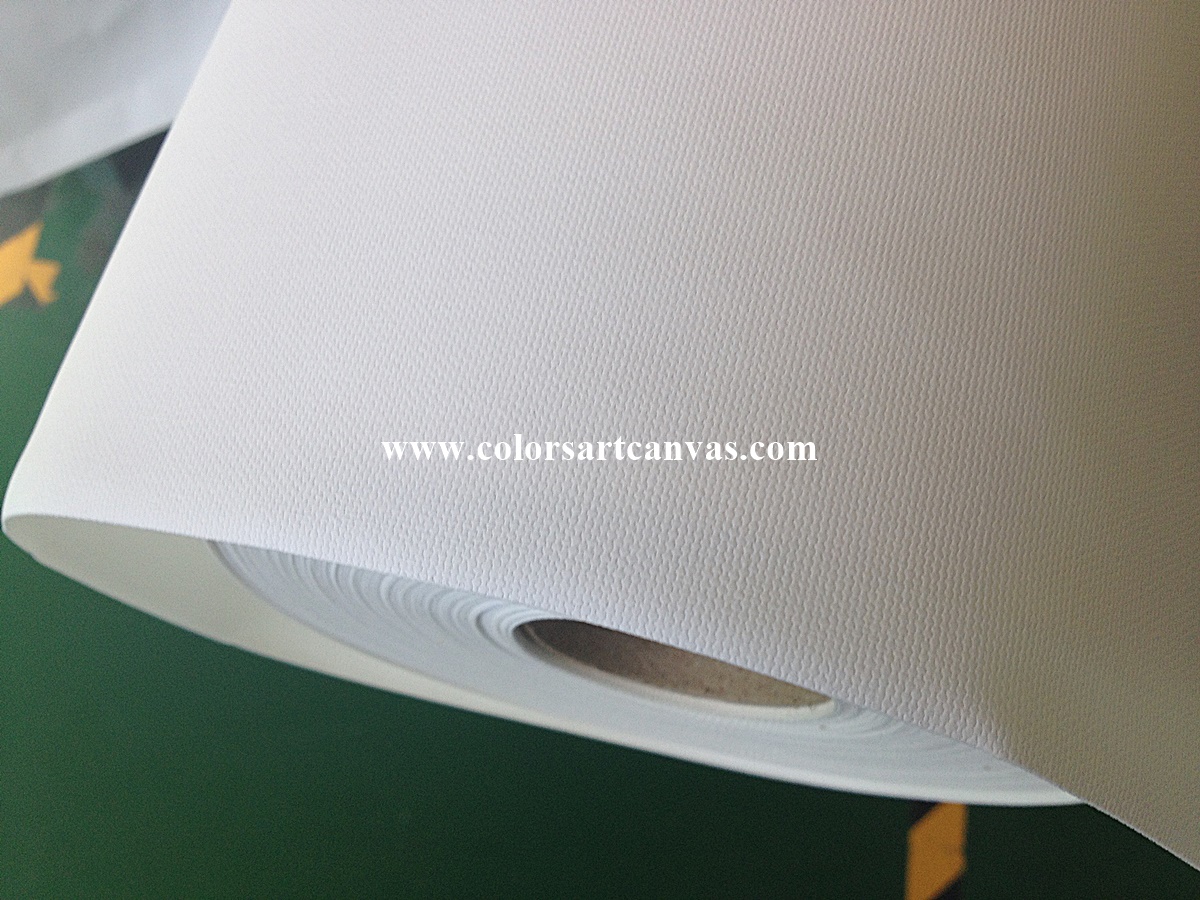
After coating, the surface appearance of the canvas is an important part of quality evaluation. The printable surface should remain visually uniform while preserving the intended textile texture of the base fabric.
Surface texture can influence the final character of the printed image. A smoother surface may emphasize image detail, while a more visible textile texture can create a stronger traditional canvas appearance.
For this reason, coating appearance, surface uniformity and fabric texture are considered together rather than judging the canvas only by GSM or material composition.
From Jumbo Rolls to Finished Roll Sizes
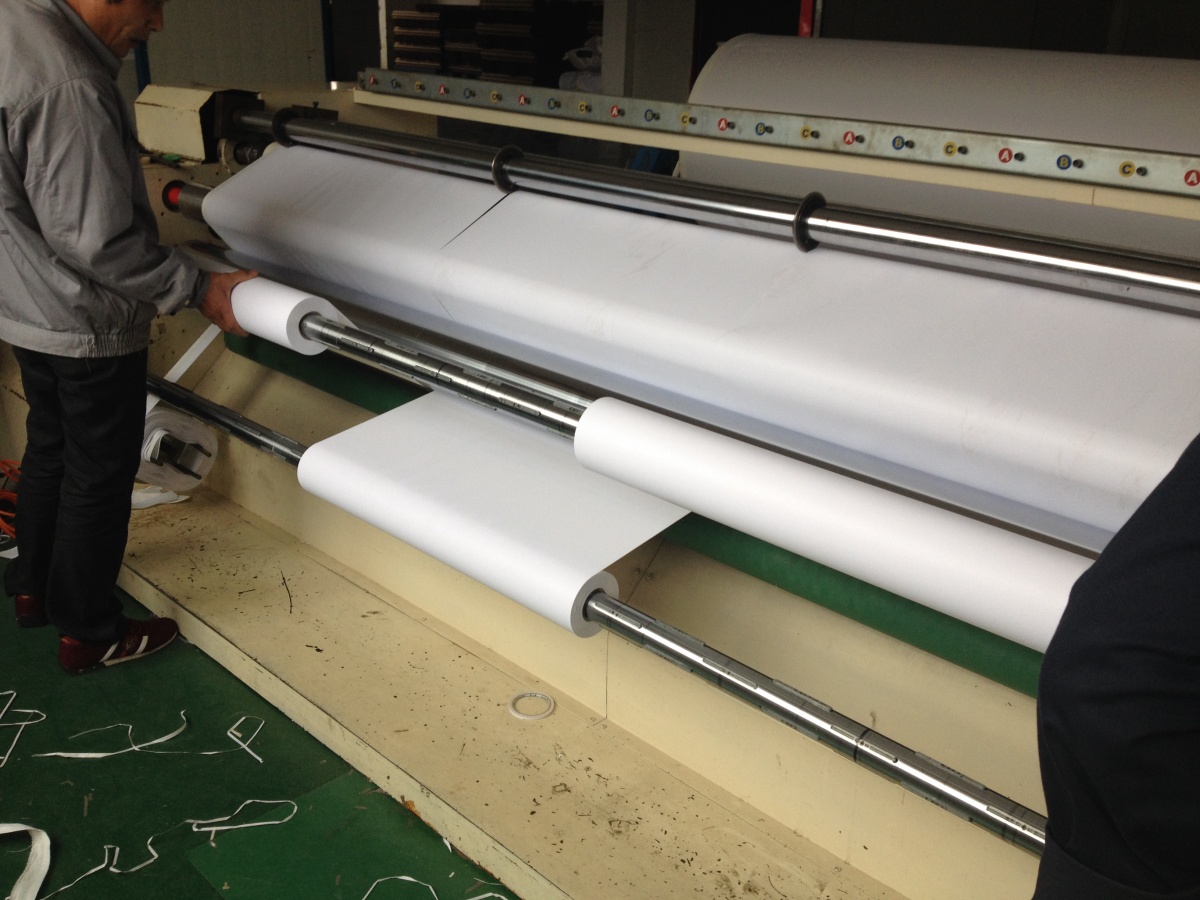
After the coated canvas is produced, the material may need to be converted into customer-ready roll specifications. This stage can include slitting and rewinding according to the required roll width, roll length and core specification.
Accurate converting is important for professional printers because roll dimensions, edge condition and winding quality affect loading, feeding and handling during production.
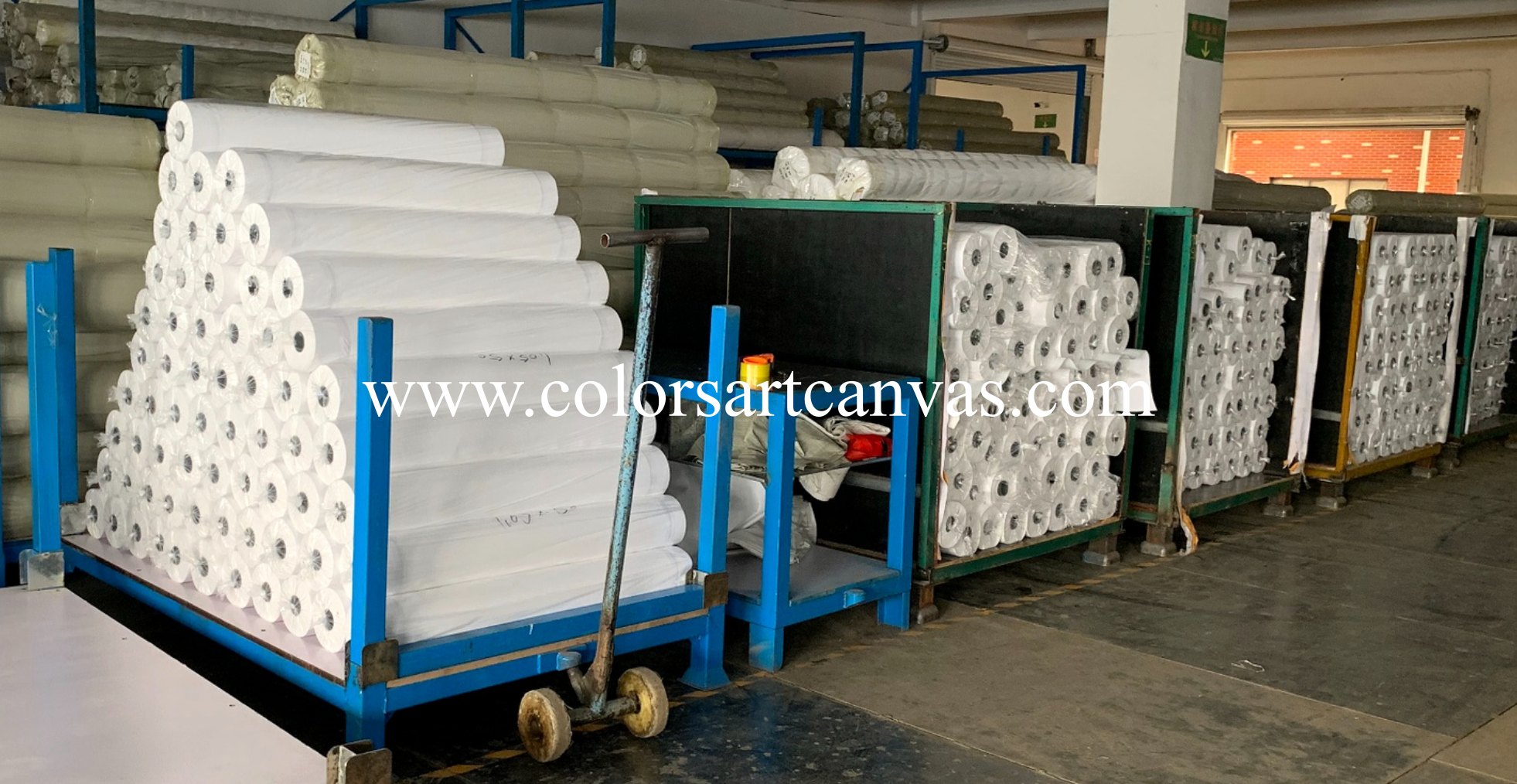
Finished Printable Canvas Rolls Prepared for B2B Supply
Once production and converting are completed, finished rolls are prepared according to the required specifications. Different customers may require different widths, lengths, core sizes, materials and surface finishes depending on their printer and production workflow.
For B2B buyers, stable supply is just as important as initial sample performance. Consistency between production runs helps reduce unnecessary printer adjustments and supports more predictable output for repeated orders.
Different Printing Technologies Require Different Coating Systems
Printable canvas is not a one-coating-fits-all product. Different printing technologies place different demands on the media surface.
Colors Art develops and manufactures selected printable canvas products for aqueous pigment, solvent, eco-solvent, latex and UV printing applications. The suitable coating system depends on the intended printer, ink technology, surface finish and final application.
For customers using a specific printer model or ink system, sample testing is recommended before bulk ordering to confirm printing and finishing performance.
Why Manufacturing Control Matters for Professional Buyers
For professional printing companies, distributors and canvas print producers, the most important question is not whether one sample looks good. The real requirement is whether the media can deliver reliable results during continued production.
Variations in coating, surface condition, winding or material construction can affect printing performance. Controlled manufacturing therefore helps support more stable production and more predictable results across repeated orders.
From Production to Printing Evaluation
The production process does not end when the canvas is converted into rolls. Actual printing evaluation is also important when developing new formulations, comparing materials or confirming suitability for a specific printing application.
By combining coating production, surface evaluation, converting and printing tests, Colors Art can assess printable canvas from both a manufacturing and practical printing perspective.
This approach helps professional buyers select media based on actual production requirements rather than relying only on material descriptions or GSM specifications.
Looking for printable canvas for your production line?
Send Colors Art your printer model, ink technology, preferred canvas material, GSM, finish, roll width, roll length and core size. We can recommend suitable printable canvas options for testing and bulk supply.