PRODUCT
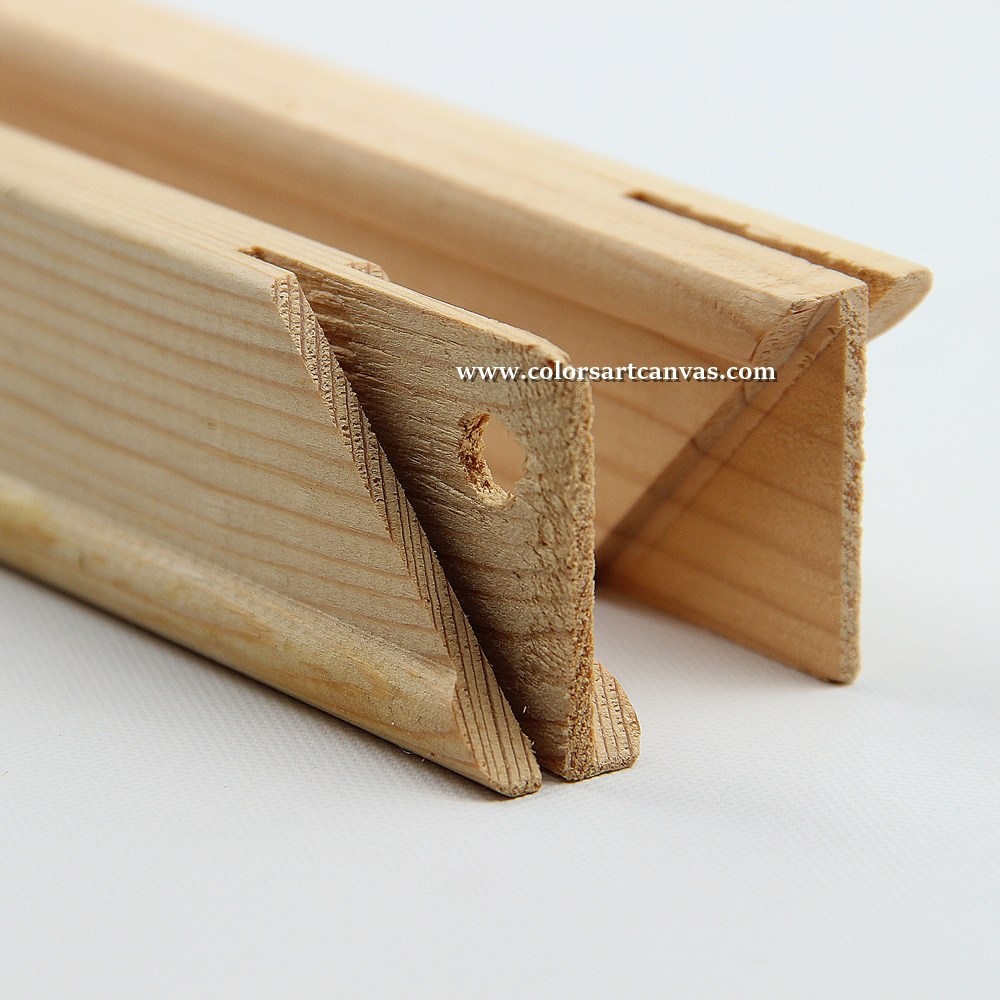
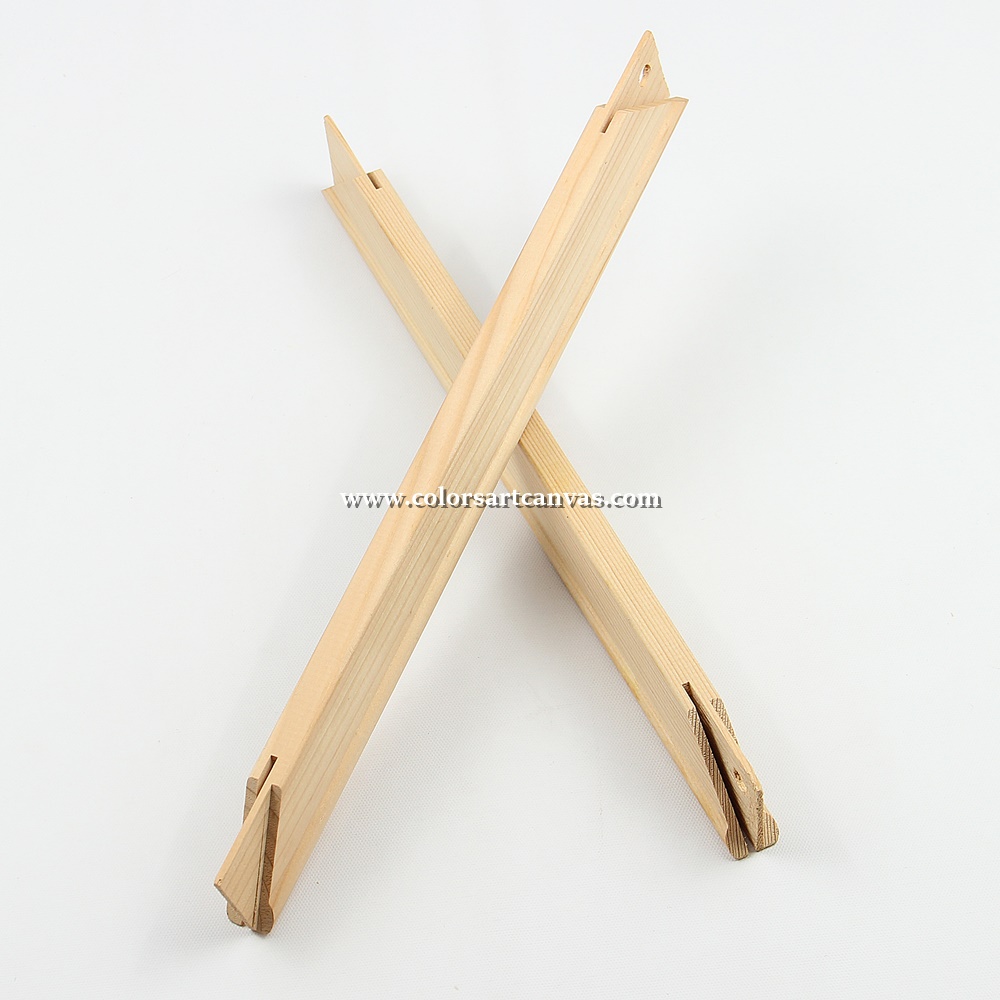
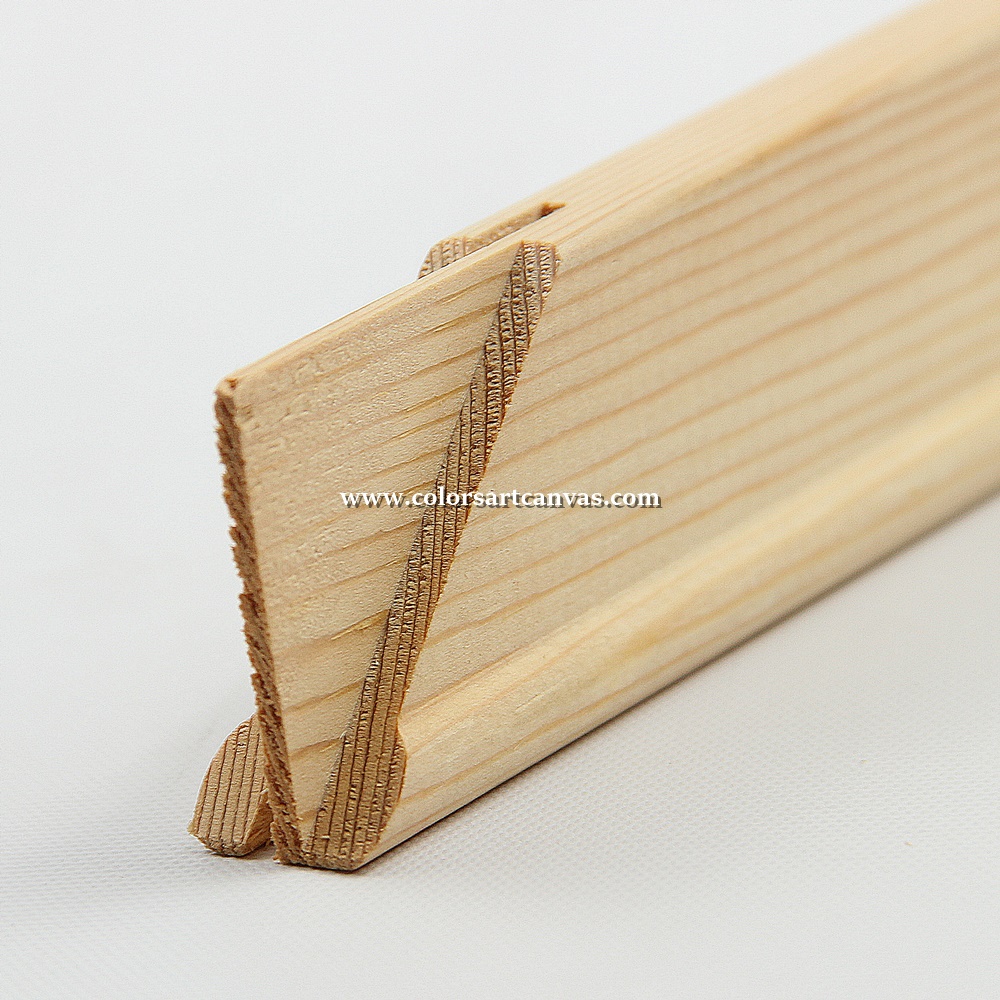
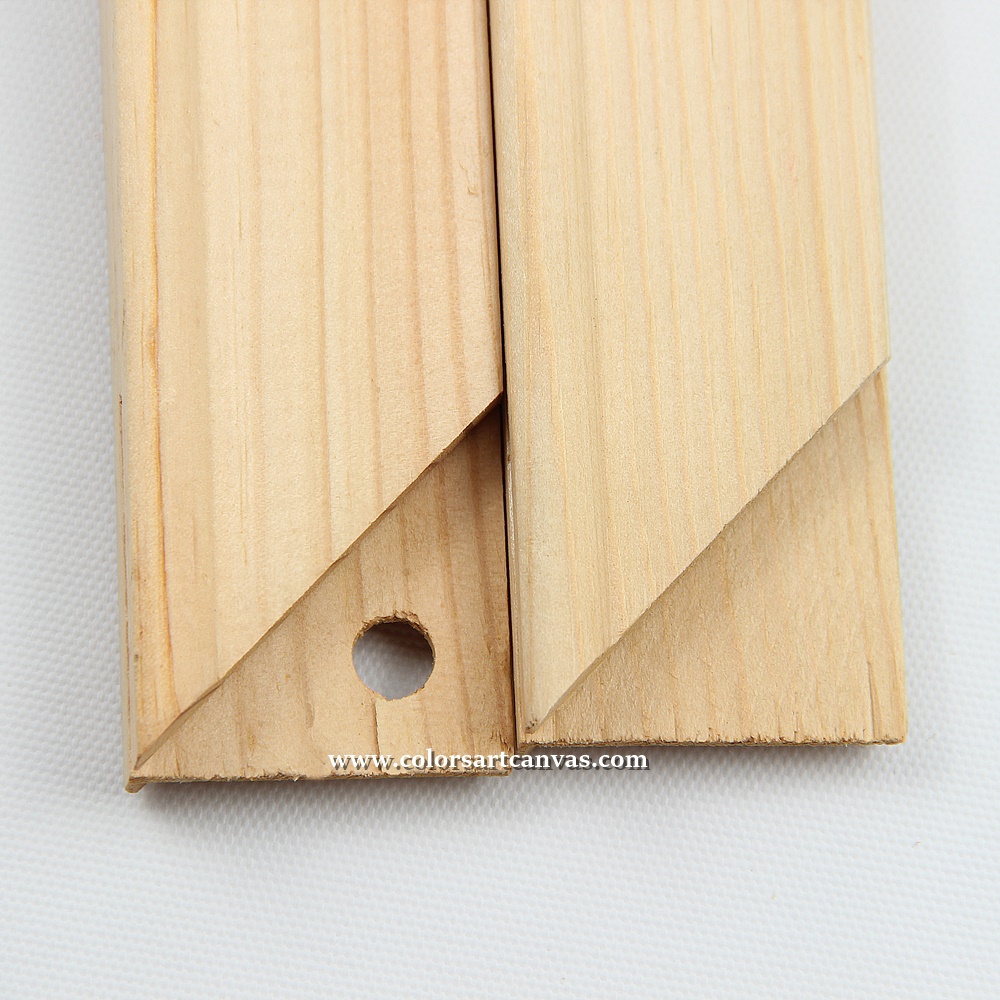
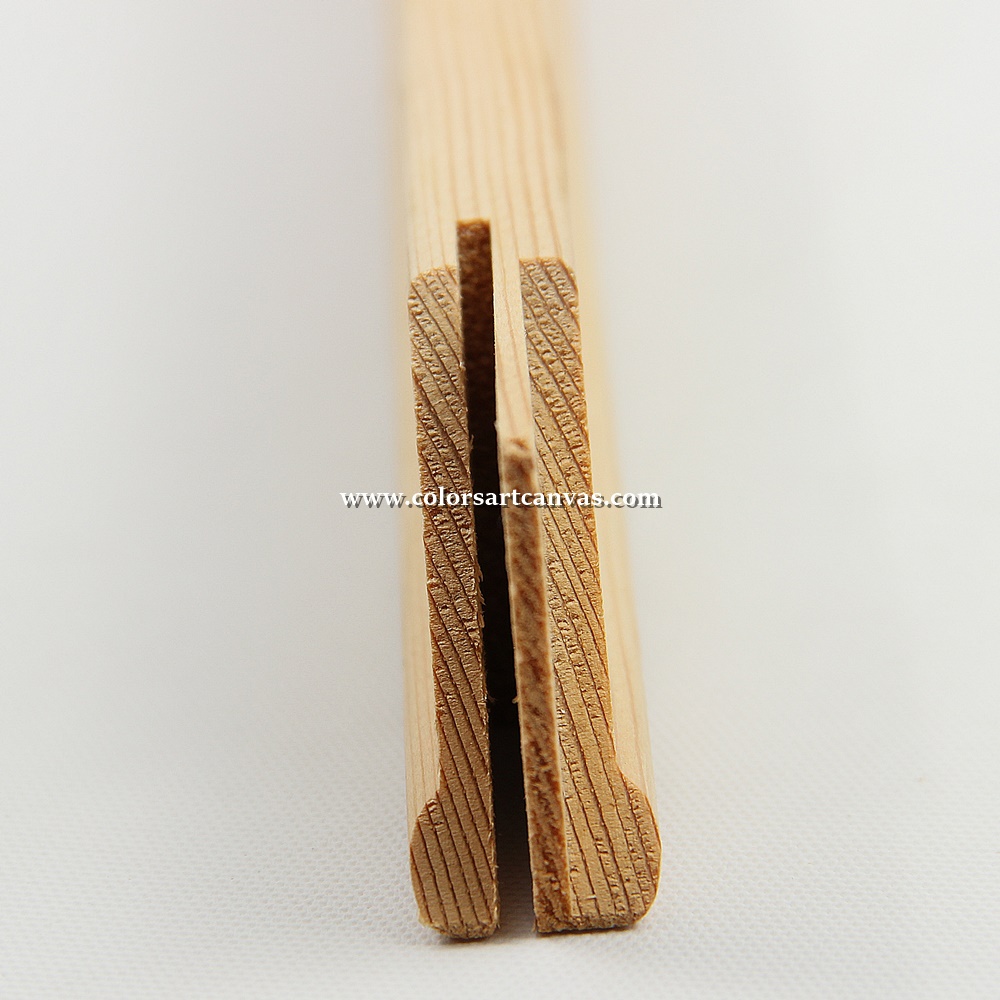
18 mm × 38 mm (3/4" × 1-1/2") Knot-Free Pine Stretcher Bars
18 mm × 38 mm knot-free pine stretcher bars, commonly referred to in the market as a nominal 3/4" × 1-1/2" (0.75" × 1.5") profile, are designed for professional stretched canvas and canvas frame production.
Manufactured from selected knot-free pine, the profile features double rounded edges and precision-machined tongue-and-groove corner joints for consistent frame assembly and reliable canvas stretching.
- Actual Profile Size: 18 mm × 38 mm
- Nominal Imperial Size: 3/4" × 1-1/2" (0.75" × 1.5")
- Material: Selected knot-free pine
- Edge: Double rounded profile
- Joint: Tongue & groove
- Application: Stretched canvas and canvas frame production
- Customization: Custom lengths, profiles, packaging and OEM production
18 mm × 38 mm Knot-Free Pine Stretcher Bars for Professional Canvas Production
Our 18 mm × 38 mm knot-free pine stretcher bars, commonly referred to commercially as a nominal 3/4" × 1-1/2" (0.75" × 1.5") stretcher bar profile, are designed for professional stretched canvas, artist canvas and canvas frame production.
Manufactured from selected knot-free pine, this standard wooden stretcher bar combines double rounded edges with precision-machined tongue-and-groove joints. The profile is intended for canvas manufacturers, framing companies, art material distributors, wholesalers and private-label canvas brands requiring repeatable frame components for volume production.
Standard and custom lengths can be supplied, while custom profiles, supporting bars, cross braces, packaging and other OEM specifications can also be evaluated according to drawings, dimensions or reference samples.
Quick Purchase Snapshot
| Product Type | Standard Wooden Stretcher Bar |
| Actual Profile Size | 18 mm × 38 mm |
| Nominal Imperial Size | 3/4" × 1-1/2" (0.75" × 1.5") |
| Material | Selected Knot-Free Pine |
| Edge Profile | Double Rounded Edge |
| Corner Joint | Tongue & Groove |
| Main Application | Stretched Canvas, Artist Canvas & Canvas Frame Production |
| Lengths | Standard & Custom Lengths Available |
| Supporting Bars | Available According to Frame Size & Construction |
| OEM / Customization | Profiles, Lengths, Joint Configuration, Packaging & Private Label |
| Sample Evaluation | Available for Profile, Joint Fit & Assembly Evaluation |
Important size note: 18 mm × 38 mm is the actual metric profile size. The 3/4" × 1-1/2" description is a commonly used nominal imperial trade reference and should not be interpreted as an exact mathematical conversion.
Why Choose an 18 mm × 38 mm Stretcher Bar Profile?
The 18 mm × 38 mm profile provides a practical balance between frame depth, material usage and structural support for standard stretched canvas production. It can be used for a wide range of artist canvas and printed canvas frame sizes where a standard-profile wooden stretcher bar is required.
For commercial canvas production, however, nominal dimensions alone are not enough. Profile consistency, wood condition, straightness, edge geometry and joint machining can all influence assembly efficiency and the final appearance of a stretched canvas.
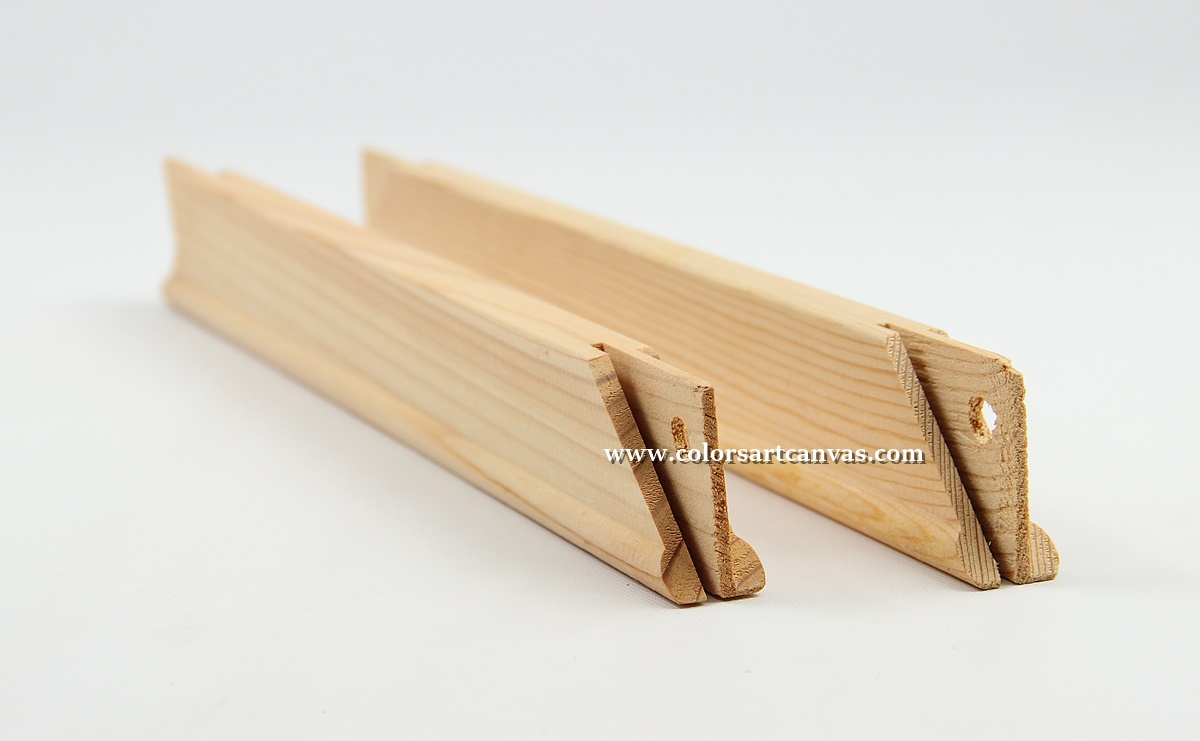
18 mm × 38 mm vs. 3/4" × 1-1/2" Stretcher Bar Size
This product is manufactured to an actual profile size of 18 mm × 38 mm. In some markets, especially where imperial measurements are commonly used, this type of profile may also be described as a nominal 3/4" × 1-1/2" or 0.75" × 1.5" stretcher bar.
The two descriptions should not be treated as exact mathematical equivalents. For technical drawings, OEM production, tolerance confirmation and sample approval, we recommend using the actual 18 mm × 38 mm metric dimensions as the production reference.
Double Rounded Edge for Better Canvas Clearance
One of the key structural features of this stretcher bar is its double rounded edge. Instead of leaving a sharp, flat inner edge close to the back of the stretched canvas, the rounded geometry creates additional clearance between the canvas and the main body of the wooden frame.
This design helps reduce unnecessary contact between the canvas and the inner frame edge. For gallery-wrapped and artist canvas products, this can help reduce the risk of visible pressure lines or edge impressions appearing on the finished canvas surface.
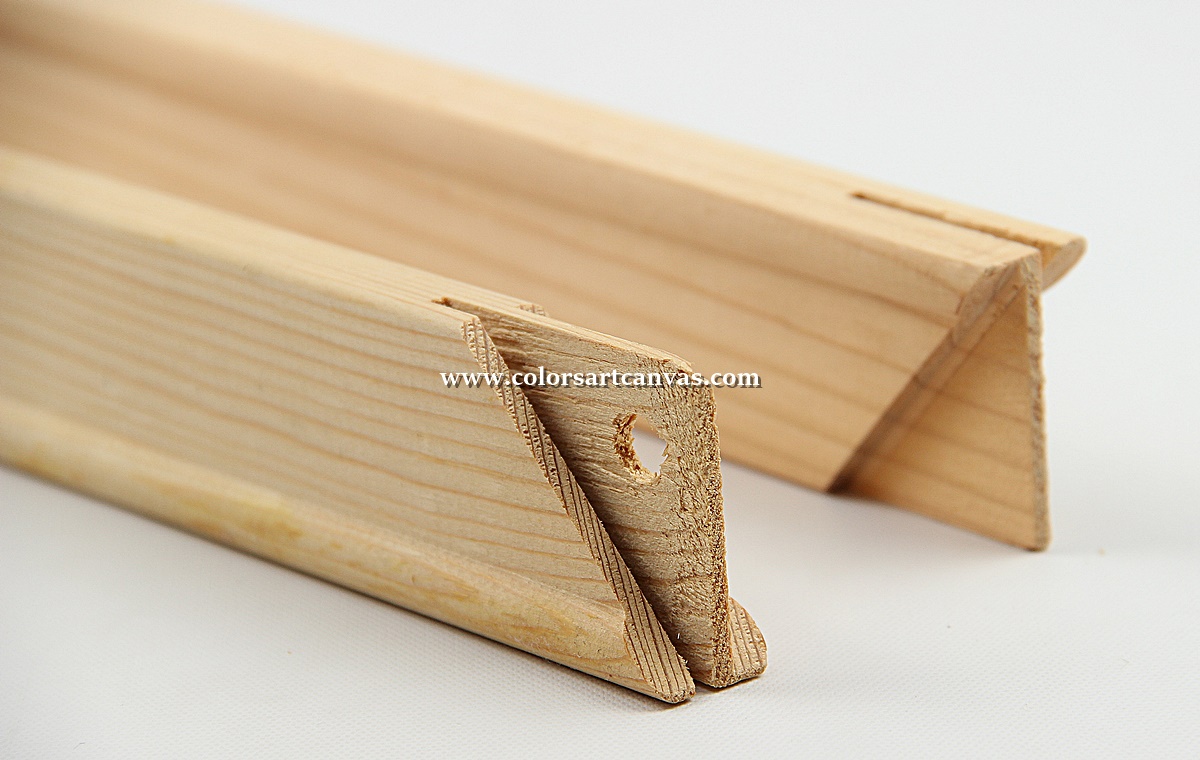
Selected Knot-Free Pine
Wood quality directly affects machining, joint consistency, straightness and the appearance of the finished stretcher frame. This profile is produced from selected knot-free pine to provide a cleaner and more consistent material base for professional stretcher bar production.
Particular attention is paid to areas that will be machined into tongue-and-groove joints, because significant knots or natural defects close to these areas can interfere with machining accuracy and joint performance.
Pine remains a natural material, so normal variations in grain and appearance can occur. For customers with specific wood-grading or visual-selection requirements, the required acceptance standard can be discussed before bulk production.
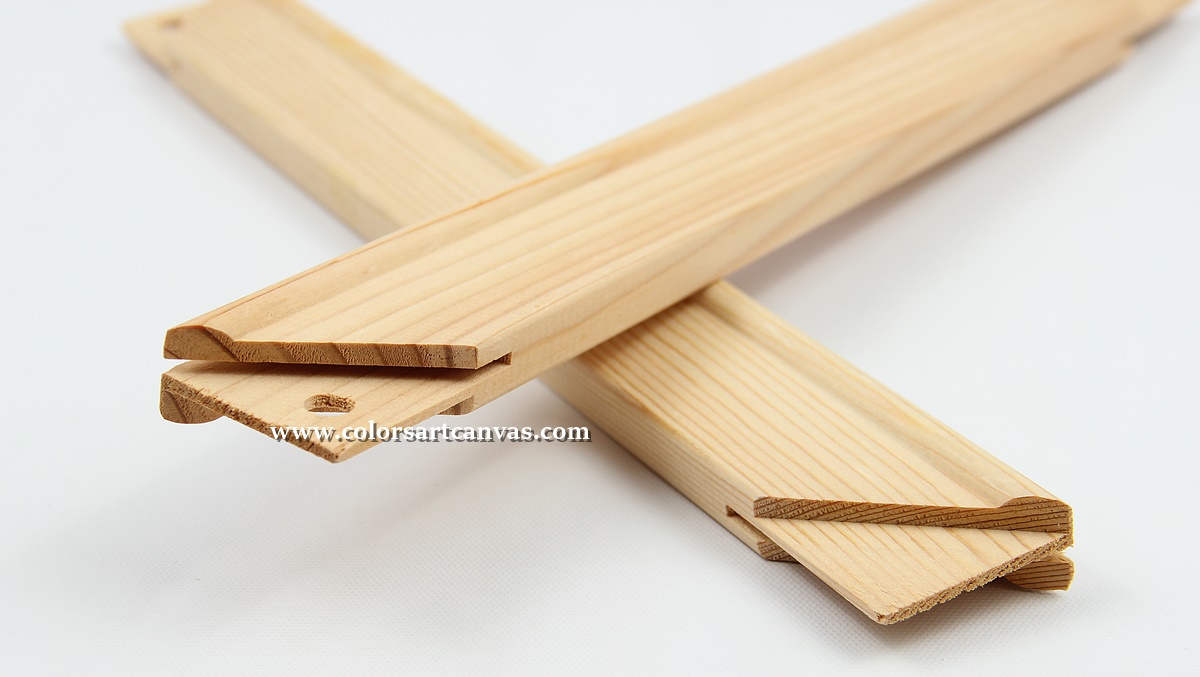
Consistent Profile & Machining for Repeat Production
For a framing workshop producing a few individual frames, minor variation may sometimes be manageable. For a canvas manufacturer assembling hundreds or thousands of frames, consistency becomes much more important.
The profile, edge geometry and joint machining need to remain consistent enough for repeat assembly. Our production and inspection process therefore focuses on the characteristics that can directly affect downstream frame production.
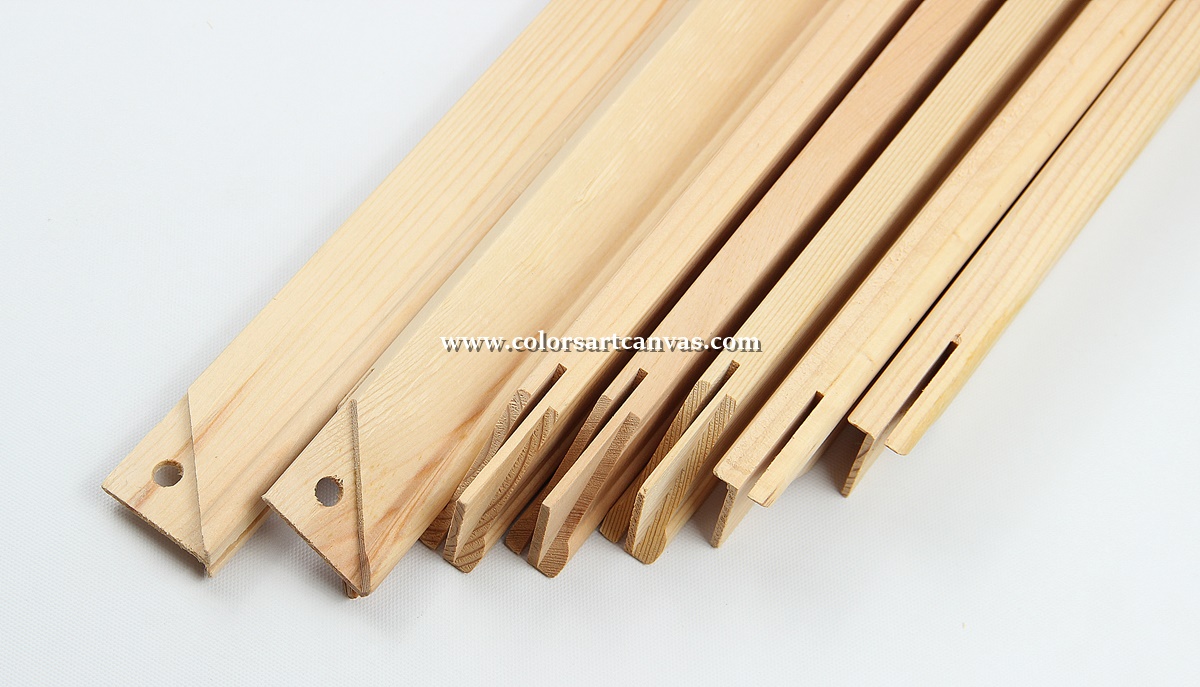
Precision Tongue & Groove Corner Joint
The corner connection uses a tongue-and-groove joint designed for stretcher frame assembly. The quality of this machining can directly influence how easily the bars fit together and how stable the assembled frame feels.
A joint that is too loose can create unnecessary movement, while an excessively tight joint may make assembly difficult or increase the risk of joint damage. The objective is therefore consistent machining and a practical joint fit suitable for the buyer's frame-production system.
For OEM customers, tongue-and-groove dimensions and assembly tightness can be evaluated according to an existing sample, technical drawing or an agreed reference frame.
What Professional Buyers Should Check Before Ordering Stretcher Bars
A wooden stretcher bar should not be selected only by price or nominal dimensions. For volume canvas manufacturing, several technical details can directly affect production efficiency, frame assembly and finished product quality.
1. Actual Profile Dimensions
Confirm the real cross-section dimensions of the product. For this profile, the production reference is 18 mm × 38 mm.
2. Nominal Inch Size
If your company purchases in imperial sizes, this profile may be commercially described as approximately 3/4" × 1-1/2". When matching an existing frame system, always confirm the actual metric dimensions rather than relying only on the nominal inch description.
3. Wood Grade
Specify whether your project requires knot-free pine or another wood grade. This can affect appearance, machining consistency and cost.
4. Moisture Condition
Moisture condition is an important factor in wooden stretcher bar production, transportation and storage. Buyers with specific requirements should confirm their expected standard before production.
5. Straightness
Straightness requirements may differ according to bar length, frame size and application. If your production requires stricter visual straightness selection, this should be defined as part of the purchase specification rather than assumed after production.
6. Tongue & Groove Fit
The joint should provide a practical balance between secure assembly and workable tightness. For customers changing suppliers, sample assembly is recommended before approving mass production.
7. Rounded-Edge Geometry
The height and shape of the rounded edge influence the relationship between the wooden frame and stretched canvas. When reproducing an existing profile, this detail should be checked against the buyer's reference sample or drawing.
8. Length & Cutting Requirements
Required lengths, length tolerances and the complete size range should be confirmed before production. Custom-cut lengths can be evaluated for different canvas programs.
9. Packaging
Export packaging should protect the profile surfaces, machined ends and tongue-and-groove areas during handling, container loading and international transportation.
Quality Control for 18 mm × 38 mm Wooden Stretcher Bars
For wholesale and OEM orders, the objective of quality control is not simply to produce one good sample. The more important requirement is maintaining the agreed product standard throughout volume production.
Depending on the customer's specification, inspection can focus on:
- Incoming pine material condition
- Wood moisture condition
- 18 mm × 38 mm profile dimensions
- Double rounded-edge consistency
- Tongue-and-groove machining
- Joint-fit evaluation
- Visible straightness
- Surface condition
- Machined-end condition
- Final inspection before packing
For long-term programs, buyer-specific inspection requirements can also be discussed and used as an agreed production reference.
Applications for 18 mm × 38 mm Stretcher Bars
This standard pine profile is intended primarily for professional B2B canvas and framing applications such as:
- Artist stretched canvas
- Printed canvas wall art
- Photo canvas frames
- Canvas manufacturing factories
- Picture framing workshops
- Art material distributors
- Wholesale canvas programs
- Private-label canvas brands
- OEM canvas frame production
Custom Stretcher Bar Profiles & OEM Manufacturing
Different canvas manufacturers often use different wooden frame profiles. In addition to this 18 mm × 38 mm standard stretcher bar, Colors Art can evaluate custom stretcher bar production according to dimensions, technical drawings or existing physical samples.
Custom requirements may include:
- Different profile widths and depths
- Custom rounded-edge geometry
- Different tongue-and-groove joint configurations
- Custom-cut lengths
- Supporting bars and cross braces
- Buyer-specific tolerance requirements
- Custom export packaging
- Private-label packaging
- OEM frame system development
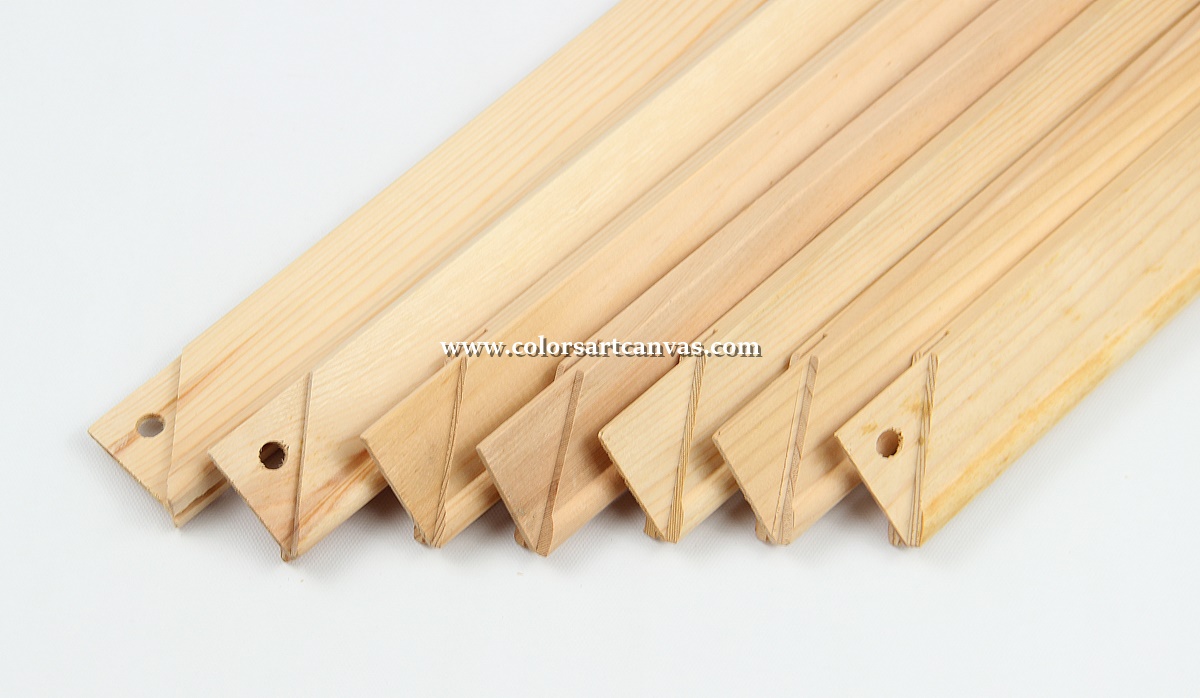
More Stretcher Bar Profiles for Different Canvas Frame Systems
The 18 mm × 38 mm profile is only one option. Different canvas products may require different frame depths, profile widths, edge geometries and supporting structures.
Profiles can be evaluated for standard stretched canvas, gallery-wrap canvas, larger-format frames and buyer-specific framing systems. If you already use an established product, a cross-section drawing or physical sample is usually the most effective starting point for technical evaluation.
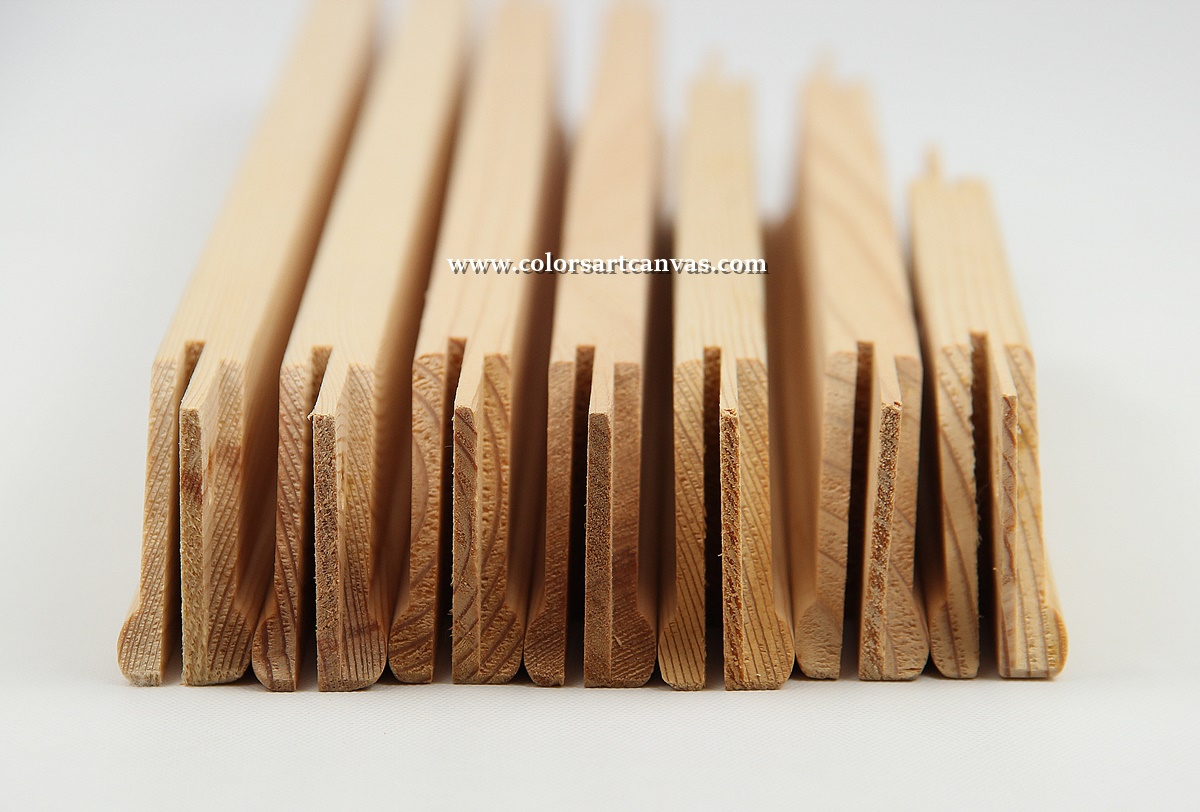
Sample Approval Before Bulk Production
Sample testing is especially useful when a buyer is changing suppliers, matching an existing stretcher bar system or developing a custom profile.
A typical development and approval process can include:
- Send your specification: Provide actual profile dimensions, required lengths, drawings, photos or a reference sample.
- Technical review: Profile geometry, joint structure, wood requirements and key tolerances are evaluated.
- Trial sample: A trial profile or sample can be prepared when required.
- Buyer assembly test: Check profile dimensions, tongue-and-groove fit and actual frame assembly.
- Final specification confirmation: The agreed sample or technical specification becomes the reference for volume production.
This process helps reduce misunderstandings between nominal trade sizes and actual production dimensions, particularly when matching an existing stretcher bar profile.
Frequently Asked Questions
What is the actual size of this stretcher bar?
The actual profile size is 18 mm × 38 mm.
Is 18 mm × 38 mm exactly the same as 3/4" × 1-1/2"?
No. 3/4" × 1-1/2" is used as a nominal imperial trade reference. It is not the exact mathematical conversion of 18 mm × 38 mm. For technical and OEM production, 18 mm × 38 mm should be used as the actual specification.
Can this product also be called a 0.75" × 1.5" stretcher bar?
It may be described commercially using that nominal size in some markets. However, buyers should confirm the actual 18 mm × 38 mm profile when matching an existing product or approving an OEM order.
What wood is used?
This version is manufactured from selected knot-free pine.
Why does this stretcher bar have a double rounded edge?
The rounded profile helps create clearance between the stretched canvas and the main body of the wooden frame, reducing unnecessary contact with the inner frame edge.
What type of corner joint is used?
The bars use precision-machined tongue-and-groove corner joints designed for stretcher frame assembly.
Can you manufacture custom lengths?
Yes. Standard and custom lengths can be evaluated according to the buyer's canvas sizes and production requirements.
Can you manufacture according to our existing stretcher bar sample?
Yes. Existing samples, cross-section dimensions and technical drawings can be used as references when evaluating a custom OEM stretcher bar profile.
Can you manufacture other stretcher bar profiles?
Yes. Different widths, depths, rounded-edge designs and joint configurations can be evaluated for OEM production.
Do you manufacture cross braces and supporting bars?
Yes. Supporting bars and cross-brace configurations can be supplied for frame systems that require additional structural support.
How do you control straightness?
Wood selection, moisture condition, machining and visual inspection are important parts of straightness control. Because pine is a natural material, particularly strict requirements should be defined as an agreed acceptance standard before production.
Can the tongue-and-groove fit be adjusted for our frame system?
For OEM projects, joint dimensions and assembly tightness can be evaluated according to your reference sample, drawing and actual assembly requirements.
Can we test samples before a bulk order?
Yes. Sample evaluation is recommended for buyers matching an existing product, approving a new profile or confirming a custom joint configuration before volume production.
Explore More Wooden Stretcher Bar Solutions
Looking for another size or profile? Explore our wooden stretcher bar range for standard canvas, gallery-wrap and custom framing applications, or send us your existing profile for OEM evaluation.
Need an 18 mm × 38 mm or Custom Stretcher Bar Profile?
Send us your required profile dimensions, lengths, estimated order quantity, wood grade, joint requirements and any available drawings or reference samples. We can evaluate the most suitable manufacturing solution for your canvas or framing system.
For faster quotation and technical evaluation, please provide:
- Actual cross-section dimensions
- Metric or nominal imperial size
- Required lengths and size range
- Wood grade requirement
- Estimated order quantity
- Tongue-and-groove joint requirement
- Required tolerances or QC standard
- Supporting bar requirements, if applicable
- Reference drawing, photos or physical sample
- Packaging or private-label requirements